

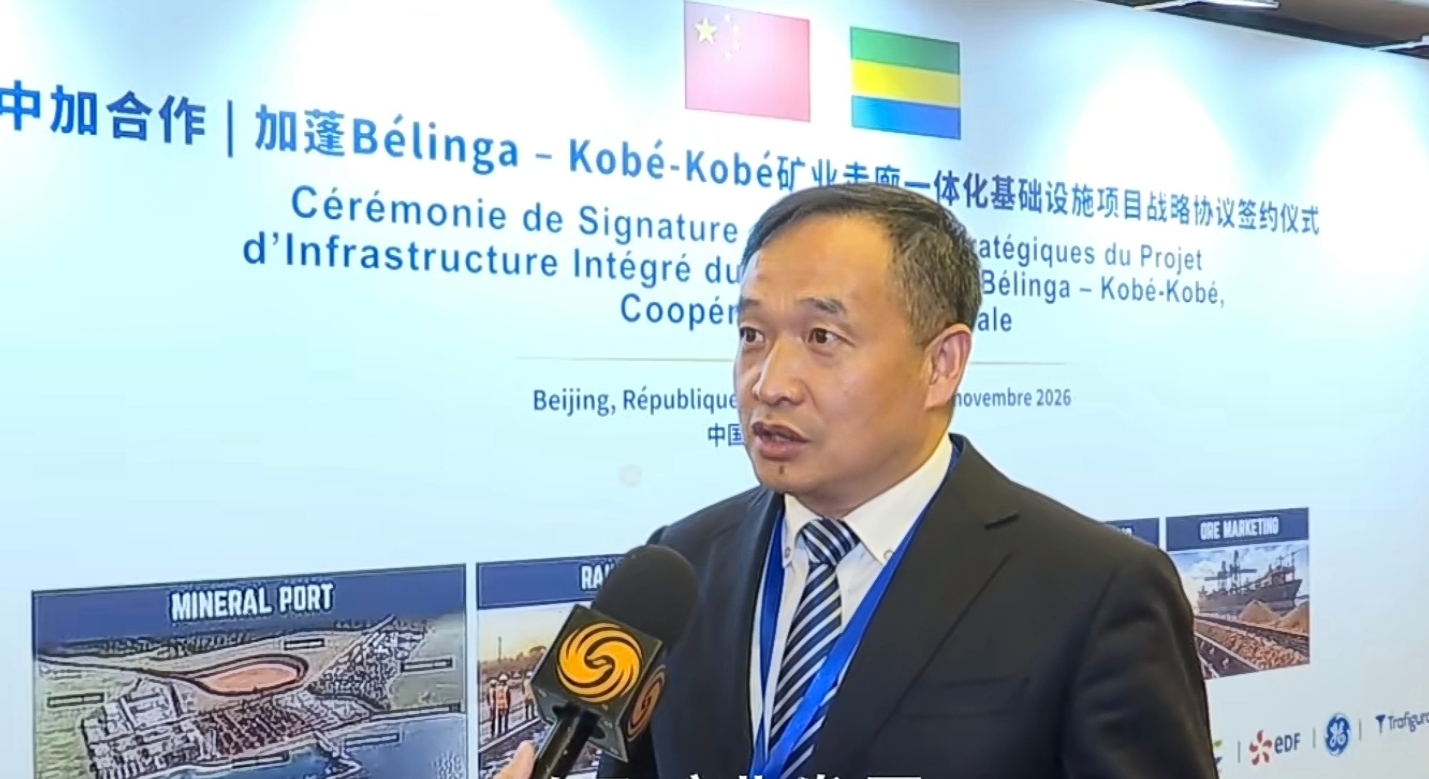
On November 5, 2026, the strategic agreement for the Belinga–Kobé–Kobé Mining Corridor Integrated Infrastructure Project was signed in Beijing. The ceremony was presided over by H.E. Brice Oligui Nguema, President of Gabon, during his state visit to China. On the same day, the China-Gabon Infrastructure Cooperation Forum for the corridor was also held in Beijing. Chairman Wang Zhizhong of SDLG Group attended the event.
Encompassing mining, railway, port, and power infrastructure, the project is a flagship initiative under the China-Gabon package for regional development cooperation. It also provides a significant new platform for Chinese construction machinery enterprises to engage deeply in major infrastructure development across Africa.
From Mine to Seaport: A 550-Kilometer “Friendly Economic Corridor”
Starting from the Belinga iron ore mine, the project will connect directly to the Kobé–Kobé deep-water port via a dedicated 550-kilometer mining railway, with water and power supply facilities built along the route. This will establish a complete logistical corridor integrating mining extraction, railway transportation, and seaport export. According to the Gabonese side, “Once completed, the corridor will create 100,000 direct and indirect jobs and promote the exchange of experience and technology transfer in the railway, port, and energy sectors.”
For Gabon, this is far more than an export corridor for iron ore; it is an industrial backbone that links the inland regions to the coast. For Chinese enterprises, it represents a landmark project characterized by extended operational fronts, dispersed equipment requirements, and a construction timeline measured in decades.
Integrated Solutions and Full Lifecycle Support: SDLG Plays a Key Role in the Corridor
Speaking at the signing ceremony, Chen Weitao, Vice General Manager of SDLG, stated: “We have long attached great importance to the Gabonese market and its mining development, and we are ready to meet the actual demands of Gabon’s infrastructure construction with reliable equipment and services.” Behind this statement lies SDLG's clear understanding of long-cycle projects: "Selling equipment is important, but ensuring smooth operation is even more critical."
The Belinga–Kobé–Kobé Mining Corridor presents multidimensional challenges for equipment suppliers. Mining operations require large-scale stripping, loading, and hauling; railway construction demands subgrade filling and track maintenance; and port development necessitates yard operations and heavy cargo transfer. Furthermore, the entire route must contend with complex working conditions, including high temperatures, laterite soil, and dense forests.
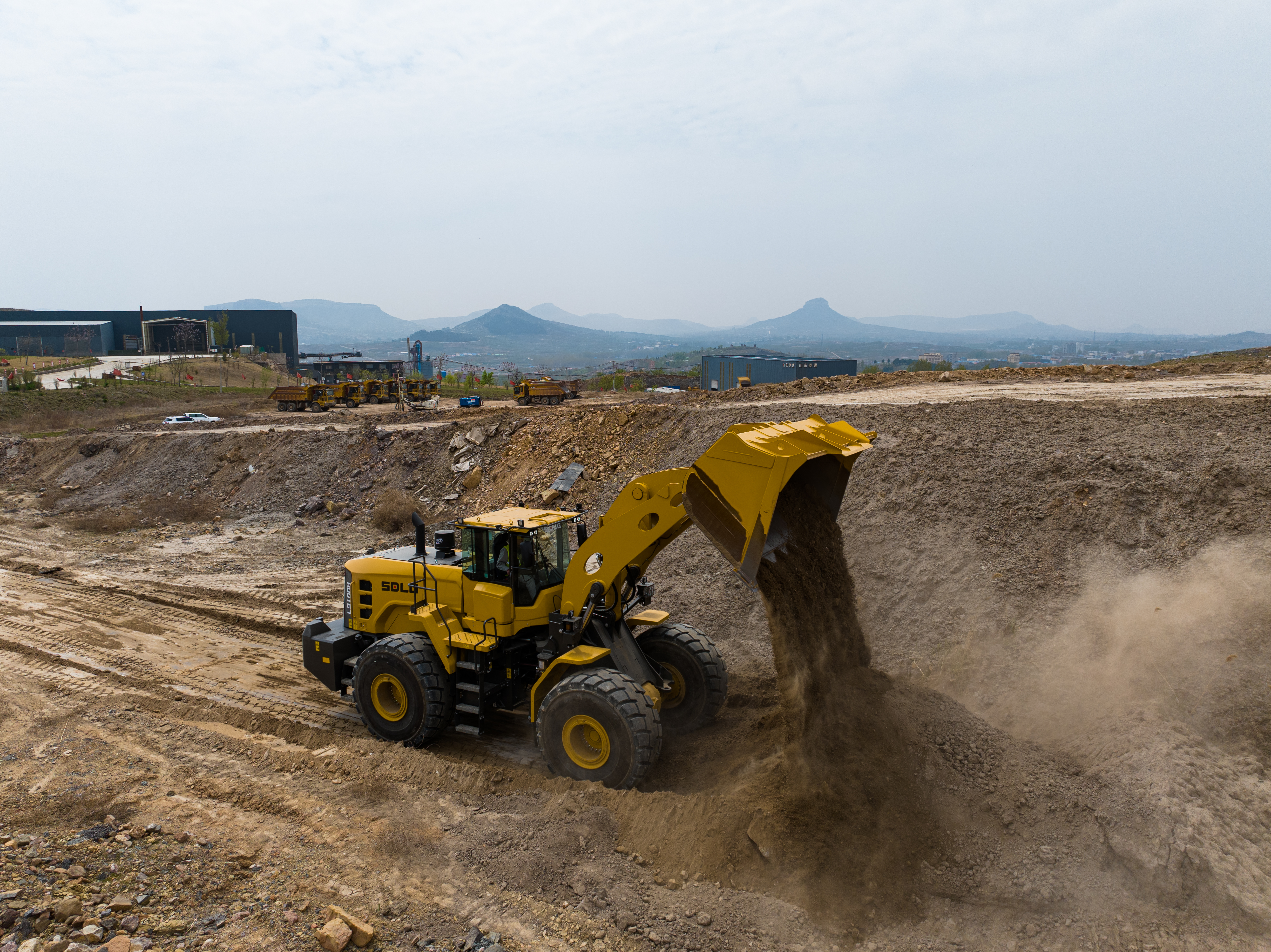
SDLG delivers an integrated equipment portfolio that covers all operational stages. Wheel loaders, excavators, wide-body mining dump trucks, and road machinery form the core lineup. The newly launched D82H bulldozer is specifically enhanced for heavy-duty applications in mining and large-scale infrastructure, providing a complete turnkey solution that spans from mine stripping and loading/transfer to railway construction and port development.
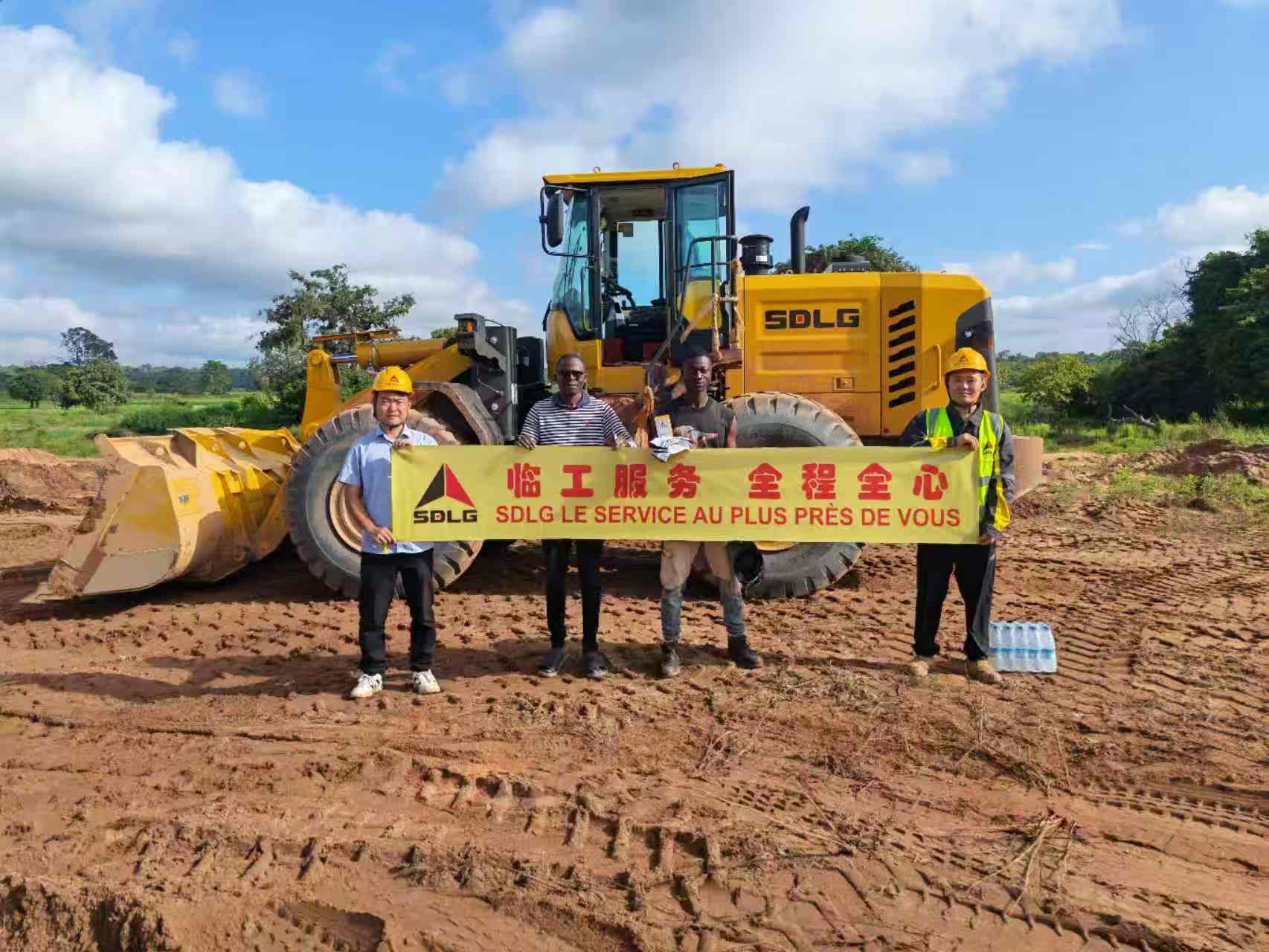
Ultimately, service delivery is what matters most. Along the 550-kilometer route, a single machine breakdown doesn’t just impact one job site; it disrupts the entire transport chain. Leveraging its existing spare parts warehouses and local service teams in Africa, SDLG will provide localized rapid response for the project—ensuring timely parts delivery, quick deployment of local engineers, and minimal downtime for fault resolution. This makes equipment uptime the most tangible commitment SDLG offers to the Gabonese side.
From Product Export to Systemic Development: SDLG Establishes a Global Footprint
SDLG’s involvement in the Gabon Mining Corridor is by no means an isolated agreement. It is a natural culmination of the company’s long-term global strategic layout.
Currently, aiming to “rebuild a new SDLG overseas,” SDLG Group is undergoing a comprehensive transformation from “product export” to “systemic export.” In the first half of 2026, the Group’s overseas revenue grew by 68.1% year-on-year. Behind this figure is the successful overseas implementation of a complete operational system encompassing sales networks, parts supply, local services, and talent development.
In Africa, SDLG has established three regional marketing centers, forming a strategic triangular network:
East Africa: Anchored in Kenya and Tanzania to serve East and Central Africa. Tanzania acts as a key hub for pre-positioning machinery and parts warehouses and cultivating local service teams.
West Africa: Built on a foothold in Nigeria, Ghana, and Côte d'Ivoire to deepen market presence in West Africa, including participating in mining cooperation projects in Burkina Faso.
Southern Africa: Connecting with South Africa, where SDLG has formed a regional strategic partnership with GEE, a leading local industrial group.
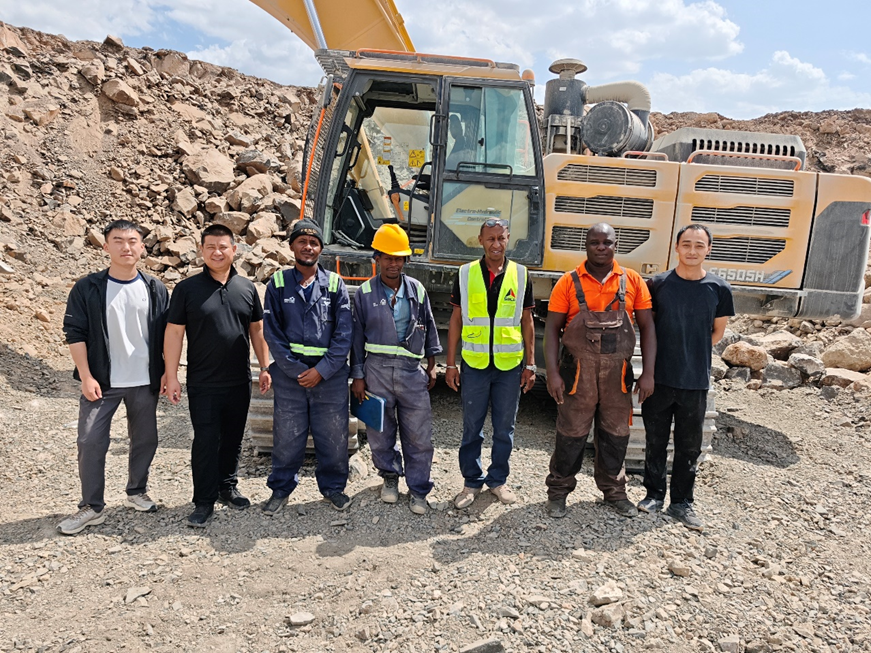
From Tanzania to the mining belts of West Africa, and on to strategic collaboration in Southern Africa, SDLG’s triangular network in Africa is transforming major projects like the Belinga Corridor into systemic strongholds for the Group.
China is Gabon’s largest trading partner. In 2025, bilateral trade between the two countries reached USD 3.94 billion, a year-on-year increase of 8.2%. The strategic agreement signed today provides a framework; what fills this framework is the steady stream of equipment shipments to Africa, the prompt, on-demand services, and the ever-strengthening industrial ties between the Linyi factory and the laterite coast.
For SDLG, this signing ceremony is not a finish line, but a new milestone in its global journey. In the years to come, the equipment uptime, the speed of service response, and the growth of the localized team along this 550-kilometer corridor will serve as the most concrete proof of how Chinese construction machinery enterprises can transition from “going global” to “integrating globally.”
Hot News
 SDLG Holds Spring Festival Gathering and the Shipment Ceremony of Overseas Electric Products
 Showing the “Power of China” to the World! SDLG’s Full Range of High-End Products Debuts at the CONEXPO-CON/AGG 2026
- 2026 Off to a Strong Start | 26 Units of Electric Wheel Loaders Delivered
 Leading the Collaboration, Powering the Future | Linyi High-End Construction Equipment Industrial Technology Research Institute Officially Launched
 Singing the Song of Striving Forward, Showcasing the Youthful Charm – “The Voice of SDLG” Singing Competition Held
 Opening of SDLG's Outlet in Udon Thani, Thailand: Over 20 Orders Secured


